Lifewit 2 Pack Laundry Basket 80L Each, Collapsible Clothes Hamper with Reinforced Handles, Freestanding Waterproof Design for Bedroom and Laundry Room, Blue 160L Total Use code: BTNJEWUJ Enter the code at checkout, select a payment method, and press continue to final checkout for the discount to display. On mobile you must select the arrow in […]
As a recurring feature, we share some amazing Amazon deals we’ve turned up. These items were the ones that were the most popular with our readers this week, and they’re still available.
Mental Floss has affiliate relationships with certain retailers (including Amazon) and may receive a small percentage of any sale. But we only get commission on items you buy and don’t return, so we’re only happy if you’re happy. Good luck deal hunting!
Drawn with great humility and thanks to one of my favorite people. Scott did all of the real work, and I threw in some dirty jokes. So, hey, a pretty good deal all around.
I’m still on this McWhorter kick. This one was good, but not as good as some of the others. It’s about English and its interactions with other languages. The bulk of the book is about the idea that repeated conquests of English speakers resulted in English being particularly simplified in terms of its grammar, especially compared to related languages. There is also a large section on a proposed link between Celtic and English grammar, and even a section positing links between German and Hebrew. The latter idea is based on the work of Theo Vennemann, whose ideas are (as far as I could tell from google and wikipedia) found to be interesting but probably wrong. Because it’s McWhorter, there’s also a long lament about the popular usage of the Sapir-Whorf hypothesis. You get the feeling that his later book “The Language Hoax” was a great unburdening of linguistic angst.
An Extraordinary Time (Levinson) This is yet another book about the idea that we are in a period of stagnation in terms of economic improvement for the average western person. Although it was enjoyable, as a book it didn’t make a strong argument. Most of the book is (admittedly fascinating) historical tidbits about technological development, mostly in the 20th century leading up to the 1970s. Levinson’s perspective ultimately agrees with that of Robert Gordon and Tyler Cowen, at least to the extent that they all blame the nature of post-1970s technology for the failure to improve the average person’s life. And, like, the others, Levinson has hope that a few technologies on deck (e.g. self-driving cars) will reverse that trend.
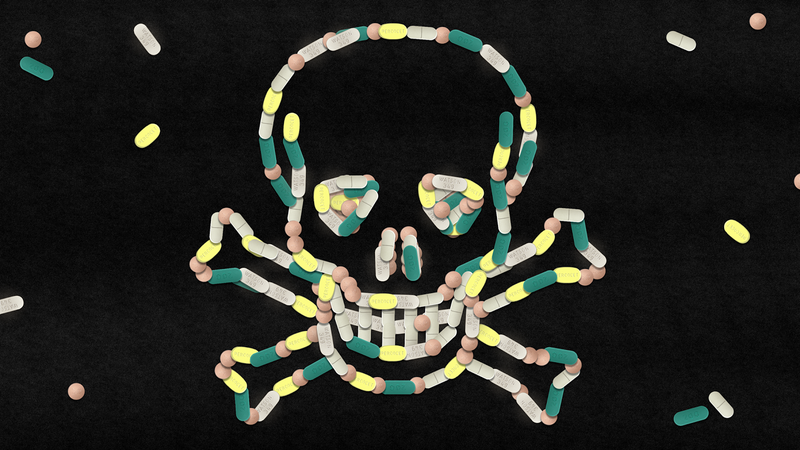
From the headlines, prescription painkillers sound pretty scary. Some of the people who take them switch to heroin, and some die of overdoses. The problem is so bad that the FDA has mandated black-box warning labels about the risk of abuse. But at the same time, these drugs are common and useful tools to manage pain.
The medications in question are opioids, drugs that work in the same parts of your brain as opium. Heroin and morphine are opioids, but so are the main ingredients of prescription drugs like Vicodin and Oxycontin. These drugs obviously relieve pain, and in some circumstances, they can induce a euphoric feeling. For many, they’re essential tools to manage pain, either from surgery, injury, or for people with chronic pain, their everyday life.
Yes, Prescription Drug Addiction Is a Real Problem
But if you ask the question the other way, it doesn’t sound so scary: Only 3.4% of people who abused painkillers ended up switching to heroin. And of course, not everybody who gets a prescription ends up addicted. Prescribers wrote 259 million scripts for opioids in 2012, and most of those were probably taken responsibly.
To Avoid Addiction, Don’t Try to Conserve Pain Medication
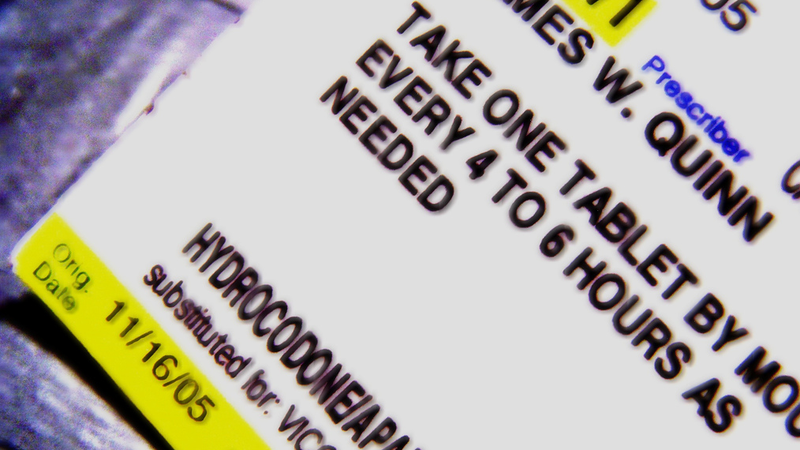
Actually follow those instructions. Photo by Erstwhile.Human,
This may sound backwards, but it’s true: if you tough it out and only take the pills when you’re in serious pain, you’re more likely to become addicted.
That’s for two reasons. First, you’re teaching your brain that taking the pill feels really good: you’re in a lot of pain, you take the pill, you feel better. The other problem is that when you’re already hurting, it takes more of the drug to fight that pain than if you had been taking it all along.
The best and safest way to take opioids, according to Jeannie DiClementi, a clinical psychologist who works with pain patients, is to take them exactly as prescribed—if it says every four hours, you watch the clock (or set up an app to ping you) and take the pills at four hours on the dot. That lets you “stay ahead of your pain,” and never get to that place where you feel desperate for the drug.
Patients are unlikely to get addicted to painkillers while they’re using them to manage short-term, serious pain, like the pain you get from an injury or surgery, Dr. DiClementi says. The trouble here isn’t the way you use the drugs when you’re in pain; it’s what you do with the drugs when your recovery is over.
Throw Those Old, Expired Pills Out Already
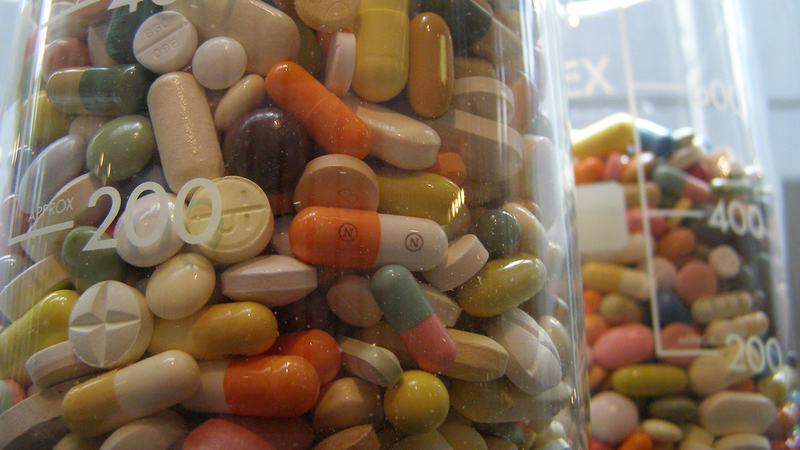
If your medicine cabinet looks like this, you’re doing it wrong. Photo by Erich Ferdinand.
Raise your hand if you have half a bottle of Vicodin in your medicine cabinet. You’re not alone—I have two. (One was my prescription, one was my dog’s.)
Here’s a typical example: a patient who had been prescribed Vicodin after back surgery might need fewer pills after a while to manage their pain, but was afraid to tell the doctor (“What if the pain comes back?”), so the prescriptions continued. By the time recovery was complete, the patient had a stockpile of pills. One day after work, this patient came home with a headache from a stressful day. In the medicine cabinet were the leftover Vicodin. A couple of pills, and the patient experienced relief not only from the headache but from the stress of the day. The next time, taking the pills was easier, until before long, the patient was addicted and seeking more. This patient, like many who become addicted, did not intend to start abusing the drug.
When you’re not in serious pain, you’re better able to notice the euphoric effect (rather than just appreciate the pain relief). For this reason, Dr. DiClementi urges people to get rid of the stockpile of pills. Mix them with garbage, the less appetizing the better—she suggests kitty litter—to hide them and to discourage dumpster divers. You can also ask about returning unused drugs to a pharmacy, or watch for drug take-back events in your community.
I know, I know, it feels like a waste. But you’re better off dumping the pills than taking them when you don’t need them.
Trust Your Doctor
You’re not alone in trying to use opioids safely: the provider who prescribes your meds should be watching out for you too.
The CDC just issued new guidelines for prescribing opioids that put more responsibility on providers. Instead of a vague idea that the doctor should talk with you about your options, the new rules get specific about when, why, and how to prescribe opioids to avoid setting you up for addiction.
With the new guidelines, for example, you’re less likely to be able to build a stockpile. Prescribers are now told to give the lowest dosage and the shortest course of painkillers that you’ll expect to need: three days’ worth in many cases. If you believe you’ll need more, discuss that with your doc—but be aware that after the first few days you may be just fine with something like ibuprofen.
On long courses of medication, your doctor is now supposed to check in with you from time to time to evaluate whether the benefits still outweigh the risks for you and your situation. In other words, don’t expect her to rubber-stamp refills.
Prescribing decisions get trickier if you have chronic pain. Opioids may not work very well for chronic pain, but if they seem to be working for you, you might not be interested in switching to something else.
This doesn’t mean that pain is all in your head. “Psychological does not mean imagined or faking,” DiClementi says. Our experience of pain is defined by what goes on in our brains. Chronic pain is not just a mind thing or a body thing, but both.
The many options for pain treatment vary wildly in their costs and effectiveness. For help navigating them, talk with your provider or ask for a referral to a pain specialist. An honest conversation is the way to go whether you’re trying to avoid opioids, or whether you feel like you need them and want to take them safely.
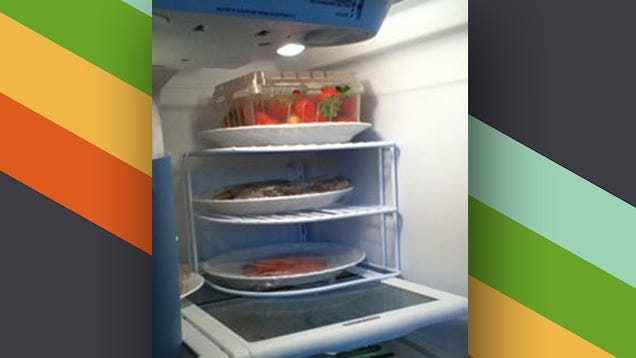
Corner cupboard organizers are great for, well, organizing cupboards, but you can also use them in your fridge to make better use of space.
Plates or serving dishes can be particularly difficult to store. They take up a lot of flat space, and you often can't put anything on or under them. Unclutterer suggests using a plate organizing shelf to maximize vertical space and gain extra storage without having to buy dedicated refrigerator shelves.
It's a cheap and effective way to not only gives you more room for storage, but also helps you stack plates of food without crushing the contents.
Click the link below for a few more tips about organizing your refrigerator and cleaning it.
 Log in





%20(1).png)

 This is yet another book about the idea that we are in a period of stagnation in terms of economic improvement for the average western person. Although it was enjoyable, as a book it didn’t make a strong argument. Most of the book is (admittedly fascinating) historical tidbits about technological development, mostly in the 20th century leading up to the 1970s. Levinson’s perspective ultimately agrees with that of Robert Gordon and Tyler Cowen, at least to the extent that they all blame the nature of post-1970s technology for the failure to improve the average person’s life. And, like, the others, Levinson has hope that a few technologies on deck (e.g. self-driving cars) will reverse that trend.